
Georgetown Previous Resident Sources
A dated source table keeps a Georgetown address trail honest. Start with the parcel and current deed, then move to the source that covers the earlier period. Printed city-directory and criss-cross runs have not been verified in the public Kentucky Room catalog, so they cannot be treated as a complete address index.
| Source | Years covered | Where held | Evidence supplied |
|---|---|---|---|
| Deed books | 1783–1886 microfilm; 1783–1883 digital | Scott Clerk and Kentucky Room | Parties, legal description, book/page |
| Current eCCLIX | Current system; first year not published | Scott County Clerk/eCCLIX | Party index and available images |
| Wills and estates | 1792–1924 microfilm; 1792–1896 digital | Library, court, KDLA | Heirs, executor, property clues |
| Tax books | 1794–1875 microfilm; 1836–1875 digital | Kentucky Room/archive | Taxpayer and valuation history, with gaps |
| Newspapers | 1816–present, title-specific runs | Library microfilm and digital archive | Sales, deaths, businesses, address mentions |
| Census | 1810–1930 local microfilm; 1950 public federally | Library, NARA, FamilySearch | Household on an enumeration date |
| Sanborn map | 1912 verified | Library of Congress | Building form and use, not occupants |
| Cemetery records | Circa 1850–January 1991 interments | City, library, KHS | Burial and lot trail |
For a recent transfer, begin at the PVA and eCCLIX. For a nineteenth-century question, the library’s digitized deed, tax, will, and newspaper runs are often faster than forcing a modern portal beyond its stated scope.
Use dates as the handoff between sources. A deed recording date can set the newspaper window. A census year can show a household close to that transfer. A cemetery or probate date can explain the next conveyance. Previous residents become much easier to separate when the same surname appears more than once in Scott County.
Anchor Georgetown Past Residents
Enter the exact situs address in the Scott County PVA property search, then compare it with the GSCPC Parcel Finder. A situs address is the physical location. The owner mailing address, when a live card shows it, is where tax mail goes and may point outside Georgetown.
Save only fields shown on the current result: map ID, owner, legal description, subdivision or lot, and map date. The PVA site was blocked during research, so its full live card layout and sales fields are not verified. GIS can still locate the parcel and adjoining lots, but its map is general reference rather than a legal survey.
A stable legal description is more useful than a street number when an old source uses another form. No official Georgetown-wide street renumbering year or crosswalk was found.
Walk Georgetown’s Deed Chain Backward
The Scott County Clerk indexes land records by party and document type, not by address. Turn the parcel’s present owner into a grantee search, meaning the person or entity that received the property. Then read the purchase deed and identify the grantor, the person or entity that conveyed it.
- Capture the current owner, parcel ID, and legal description from PVA or GIS.
- Search that owner as grantee in the clerk index. Record the purchase deed’s date, document or instrument number, and book/page.
- Open the deed image and confirm the legal description. If it names a plat, retrieve the clerk’s recorded cabinet and slide.
- Search the seller as a prior grantee. Repeat with the same lot, subdivision, or description.
- When online coverage stops, move to the deed room terminal, known-document form, library books, or KDLA/KHS microfilm.
- Grantor
- The party conveying an interest in the recorded deed.
- Grantee
- The party receiving the interest.
- Chain of title
- The linked sequence of conveyances for the same property.
- Legal description
- The lot, block, subdivision, or metes-and-bounds text that identifies land beyond its street label.
The clerk cannot perform a title search. New instruments may have book/page numbers before the 24–48-hour proofing process is complete, so call for the current good-through date.
Georgetown Deed Access Choices
Scott residents researching previous residents for personal, noncommercial use may open a free private eCCLIX account limited to Scott County and five searches per day. The residential eCCLIX signup is the official entry point.
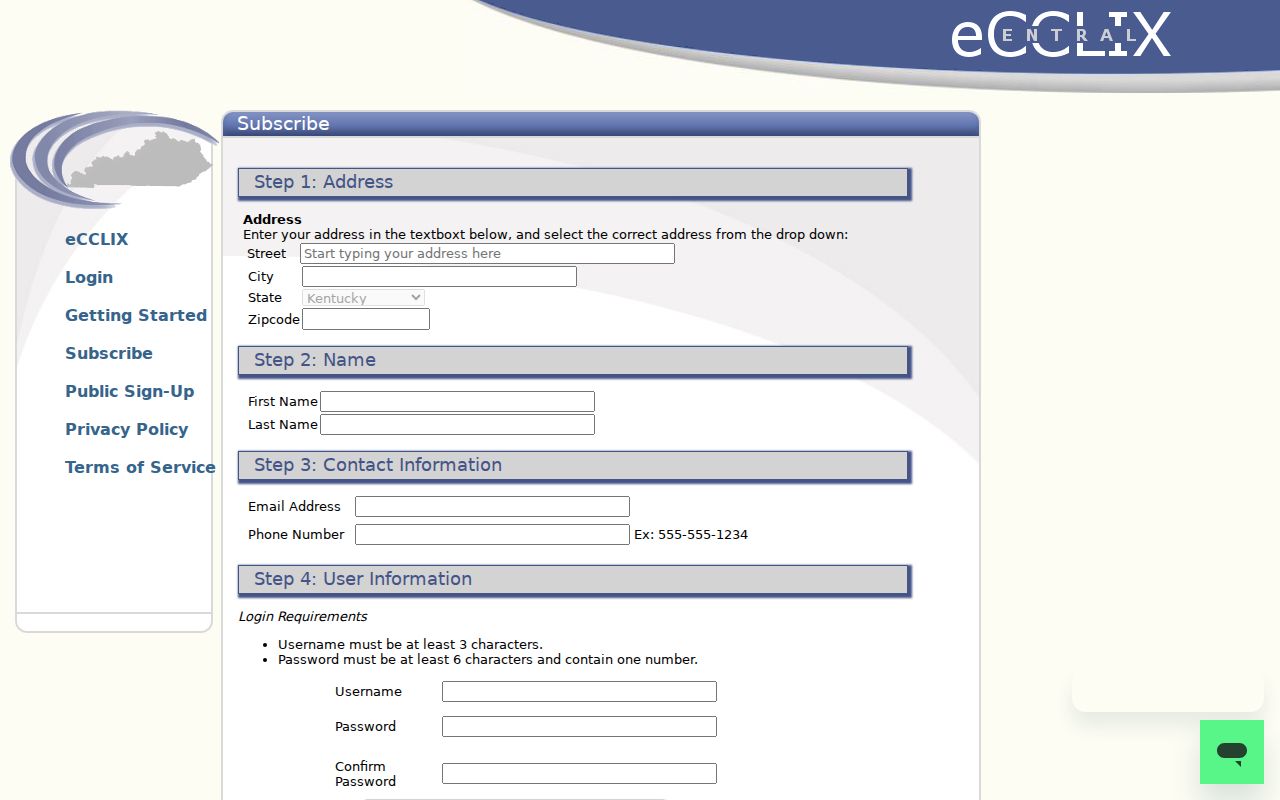
The account is an index route, not a guarantee that every historic image is online. If the exact book and page are known, submit the clerk’s document request form by its listed channels. An open-records request is another route for a sufficiently described public file. In person, the deed room and its terminal remain important.
Historical work has a separate fallback. The Kentucky Room holds deed microfilm through 1886 and a digitized run through 1883. KDLA and KHS can help with state-held copies or research requests when local access fails.
The known-document form is best after an index has supplied the instrument or book/page. Include the parties, document type, recording date, and identifier that the clerk needs. For an older book, ask whether the copy comes from the deed room, microfilm, or another custodian before assuming the online system is complete.
Georgetown Past Household Evidence
Owners are not the same as all past residents. Pair a deed year with the nearest open census, then search the address, owner, relatives, and street in local newspapers. Scott County Public Library has census microfilm from 1810 through 1930. The 1950 federal census is public under the 72-year release rule, while 1960 is not yet open on that schedule.
- Place each owner and transfer in a dated timeline.
- Check the nearest public census for a matching household and place.
- Search the library archive with name variants, street, spouse, business, and a narrow date window.
- Confirm an OCR hit against the newspaper page image or microfilm.
- Add obituary, probate, or cemetery evidence only when dates and identity details agree.
Exact Georgetown printed directory publishers, years, and reverse-address runs were not exposed in official online catalog pages. Ask Kentucky Room staff before claiming a directory entry exists. The verified historical collections themselves are described on the Georgetown city directories page.
Kentucky Room Address Research
The Scott County Public Library Kentucky Room is the strongest offline bridge for previous residents. Its holdings include more than 250 surname Family Files, maps, local histories, cemetery and vital material, oral histories, family papers, and newspapers. Contact the room at 104 S Bradford Lane in Georgetown or 502-863-3566.
Ask staff for the exact address, surname variants, and a date range. Useful named works include A History of Scott County as Told by Selected Buildings, Images of America: Georgetown and Scott County, and the Real Country volumes. Rare books require an appointment and photo identification. There is no published “research your house” guide, so a focused shelf and archive inquiry is the honest route.
Phone, email, and in-person access matter because some family files and special collections are not described item by item online.
The library’s newspaper holdings range across changing titles, including the Georgetown Times, Georgetown News, Graphic, and News-Graphic. There is no surname or subject index on the microfilm. Search the digital OCR with exact names and place terms, but inspect the page image before treating a match as evidence.
Map Georgetown’s 1912 Buildings
The Library of Congress Georgetown Sanborn set contains 19 public-domain sheets dated June 1912. A sheet can show a building footprint, construction material, number of stories, use, openings, and nearby named businesses. It does not identify a private occupant.
Use a Sanborn sheet to test whether a structure existed and how the block looked. Pair it with a deed, tax entry, newspaper mention, or census result. Earlier Georgetown editions surfaced in catalog searching, but their exact item pages were not verified during research and should not be presented as a complete run.
A city permit can help date later work. Georgetown Building Inspection publishes forms and categories but no complete address-search archive, so request the exact address and year range through the city’s written records process.
Georgetown Records Survived Unevenly
The library archive records Scott County courthouse fires in 1837 and 1876. Those events explain why a clean deed, will, or order-book trail may break. They do not prove that every book from either period was destroyed. A missing page is a source problem to investigate, not proof that no owner or household existed.
When the chain breaks, compare the clerk’s surviving material with library microfilm, digitized books, tax records, newspapers, and KDLA holdings. The digital archive exposes 21,865 deed-book pages, 10,691 will-book pages, and thousands more pages of orders and tax books. Searchable volume helps, but digitization is ongoing and OCR is not a perfect index.
Note: Preserve the title, book, page, image number, and search date for each Georgetown address-history claim.
Close a Georgetown Resident Trail
Obituaries, wills, probate files, and cemetery records can connect a deceased owner to heirs or a later address. Search the library’s newspaper archive first, then compare a will book or Scott Circuit Court estate file. A death index is a lead; eligibility and confidentiality rules still govern certified copies.
The Georgetown Cemetery historical marker page is shown in the assigned capture below. It gives verified local context, including the cemetery’s nineteenth-century development and named burials.
Cemetery interment microfilm covers roughly 1850 through January 1991, with separate minutes and deed runs. Burial is not proof of the person’s last home, but it can supply a date and family lead for a previous-resident timeline. The Tent Girl identification as Barbara Hackmann Taylor in 1998 is a striking local example of cemetery evidence, public memory, and later identification working together.
Use Georgetown History Lawfully
Previous-resident research fits family history, estate work, preservation, and personal curiosity. Records should be cited with dates and checked against their custodians. Protected addresses, sealed matters, confidential vital records, and private utility data are deliberate limits, not missing pieces to reconstruct through relatives or neighboring parcels.
Lawful use. Never use a Georgetown address trail to track, stalk, harass, or expose a living person.
A defensible result distinguishes ownership from occupancy and fact from inference. If the deed names one owner but a census or notice names a household, report each source on its own terms.
Keep living people out of a historical narrative unless a current public record is necessary to bridge the parcel. The goal is to document the building and its dated household trail, not to publish private routines, contact details, or relationships that the custodian does not provide.