
Finding Georgetown Residents by Record
Start from the fact you already hold. A Georgetown street address points you to the Scott County PVA and the Georgetown-Scott County Planning Commission parcel map, which together reveal the parcel and its current assessed owner. A full name with a birth date fits Kentucky's Voter Information Center, where an active registration and polling details may appear. A bare name can be tested against Scott County deed indexes, CourtNet guidance, historical newspapers, cemetery files, and the Kentucky Room's family collections. Each record answers one narrow question. None covers every person in a household.
The strongest Georgetown residents directory search joins records made for different reasons. A parcel roll ties an owner to land but proves nothing about who sleeps there. A deed names only the parties to a transfer. A voter match reaches just the registered voter who supplied the required identity details, so renters, protected-address participants, and anyone absent from a public index stay invisible. Note the source date and exact geography beside each result. A Georgetown mailing address outside the city limits is not the same as the incorporated city.
- Put a Georgetown address into the PVA search or GSCPC Parcel Finder. Save the map ID, assessed owner, situs address, and legal description that the source exposes.
- For a known person, use the Kentucky Voter Information Center with the legal first name, last name, and date of birth. Treat a match as registration evidence only.
- Carry the owner or person name to the Scott County Clerk land index. Search party names with few limits, then note document type and book/page.
- Use the library's newspaper, census, cemetery, and family-file sources when the question concerns a past Georgetown resident or an old address.
- When an index does not expose the needed record, send a narrow written request to the office that keeps it. Include the name, address, record type, and date span.
Georgetown Residents Directory Offices
Georgetown keeps most resident records at the county level. The Scott County Clerk records deeds, mortgages, wills, plats, marriage licenses, and election material. The PVA maintains the property valuation roll. That makes it the natural address-to-owner starting point. Voter registration sits with the county election office and the State Board of Elections. Court files belong to the Circuit Court Clerk at the Scott County Justice Center. These offices sit near downtown. Each keeps its own index. The full address workflow lives in the Georgetown street directory.
Scott County Clerk Deed Room
101 E Main Street, Room 112
Georgetown, KY 40324
502-863-7875
Scott County PVA
101 E Main Street, Suites 203-206
Georgetown, KY 40324
502-863-7885
Scott County Elections Office
101 E Main Street
Georgetown, KY 40324
502-863-7875
Georgetown Address-to-Name Bridge
Scott County's central quirk is easy to state. The property and GIS tools start from an address or parcel. The clerk's land index, though, starts from a party name and document type. So an address needs a bridge between them. The GSCPC GIS gateway opens into Parcel Finder and plat resources. Its tutorial walks through address autocomplete, map browsing, parcel identification, and printing. The Scott PVA also advertises owner-name and property searching. Its live form restricts some access, though, so treat its exact current fields as unconfirmed.
Once the current owner and legal description are in hand, the next step is eCCLIX. The public deed-room terminal can also pull deeds and mortgages under the party's name. Search with fewer fields first. The clerk suggests last name and first name, leaving document type broad. A parcel's situs address is its physical location; the owner's mailing address may lie elsewhere. The legal description is the durable land identifier, one that survives even a street-label change.
- Parcel
- A mapped unit of land assigned its own local identifier.
- Situs address
- The physical street location of the parcel, not necessarily the owner's mailing address.
- Index
- A finding list that points to a filed document; it is not always the document image.
- Grantor and grantee
- The party giving an interest and the party receiving it in a recorded transfer.
Scott County Deed Search Choices
Georgetown offers more than one channel into the land records. Scott County residents can open a free private eCCLIX account for personal, noncommercial Scott-only research. It allows five searches per day. Paid access covers broader use. The deed room also holds a public terminal. Deputy clerks will explain how the index works. They cannot run a title search or interpret a document's meaning. For older deeds, the Scott County Public Library keeps microfilm and a digitized archive. Digitized deed books span 1783 through 1883. Microfilm extends through 1886.
| Route | Best use | Key limit |
|---|---|---|
| Private eCCLIX account | Scott-only name and document searches | Five searches per day |
| Deed-room terminal | Index help and in-person review | Staff cannot perform title research |
| Known-document form | Copies when parties, type, or date are known | Allow three business days for review |
| Library archive | Early Georgetown and Scott County books | Fire damage and gaps require care |
Fees are posted plainly by the clerk: paper copies run 25 cents per page, certified copies cost $5 per document, and large plats are $3. New filings get book and page data before a standard 24-to-48-hour proofing period, so call for the current good-through date when timing matters. The Scott County public-records page shows the route from eCCLIX to copies and DOCALERT.
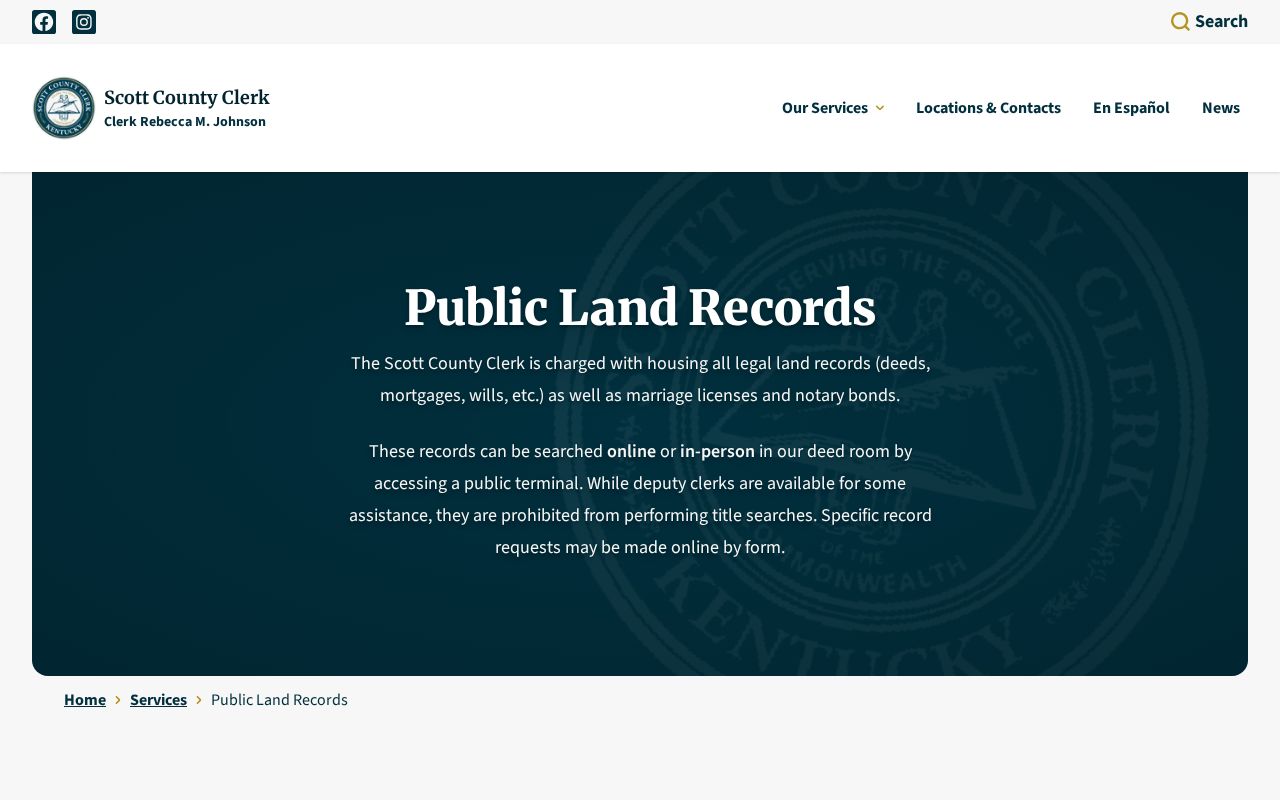
The Scott County Clerk's public-records page puts party names, book and page references, and the deed room at the center of any Georgetown land search. Those three links carry most of the work.
Current Georgetown Residents Directory Sources
Current official sources list people only within each record's purpose. The PVA stays fixed on owners and parcels. VIC confirms a registration for someone who supplies the required identity fields. The recorder index lists parties to filed documents. CourtNet results concern litigants and cases. Professional and business systems tie a name to a license or entity. But they never establish where that person lives. Public neighborhood pages name places and governing groups, not private member rosters. Pick the narrow source that fits your question. Then verify the same person in a second record.
| Source | Who It Lists | Keeper | Access |
|---|---|---|---|
| Property valuation roll | Assessed parcel owners | Scott County PVA | Property search and office |
| Voter Information Center | Matching registered voter | Kentucky elections system | Person-specific lookup |
| Land-record index | Parties to deeds and mortgages | Scott County Clerk | eCCLIX or deed room |
| Court index | Named case parties | Kentucky Court of Justice | CourtNet environment and clerk |
| License and entity indexes | Licensed people and business principals | Kentucky DPL and SOS | Free online verification |
A Georgetown residents directory result earns trust when the name, date, and place agree across unrelated systems. Court or license entries carrying the same name can belong to someone else entirely. A second record separates the true match, and no single index hit should stand as proof on its own.
Georgetown Voter Lookup Limits
Kentucky's VIC portal takes a legal first name, last name, and date of birth, with the last four digits of a Social Security number left optional. A match can confirm current registration, a polling place, and absentee-ballot status. It is not a browseable Georgetown street list. Whole-file voter access runs through KRS 116.095 and 31 KAR 3:010. That route uses an SBE-84 request with eligible-use certifications, geographic choices, and set delivery terms.
| Field | Entry | Role |
|---|---|---|
| Legal first name | Text | Required identity match |
| Last name | Text | Required identity match |
| Date of birth | Date | Required same-name filter |
| Last four of SSN | Four digits | Optional added match |
A voter roll will not list everyone under one roof. Safe at Home and similar statutory shields can also keep an address you expect to find out of public view entirely.
Georgetown Court Name Checks
CourtNet 3 guidance explains how to search court records by person, business, or case. Results can list party role, case number, county, case type, status, next event, charges, and docket entries. For copies and older files, the Scott County Circuit Court Clerk at 119 N Hamilton Street is the route. Keep in mind that a matching name only shows someone similar appeared in a court matter, not that this person is the Georgetown resident you want.
To separate same-name hits, add a middle initial, an approximate date, a known relative, an address, and the county. Older plaintiff and defendant entries appear in historical judicial indexes at KDLA, and federal matters go through PACER. When online access stalls, call the Scott clerk at 502-863-0474 or file a focused record request with the party name, case type, and likely date span.
Georgetown Business Identity Clues
Two statewide systems can support a resident match, though neither replaces one. The Kentucky Business Entity Search ties names to active or historical entities. The Department of Professional Licensing lookup confirms many regulated credentials, though some professions sit on a board-specific portal. Both are useful for telling two Georgetown people with the same name apart. An organization or credential is a distinguishing fact. The business search page displays the official state entry point for a Georgetown affiliation check.
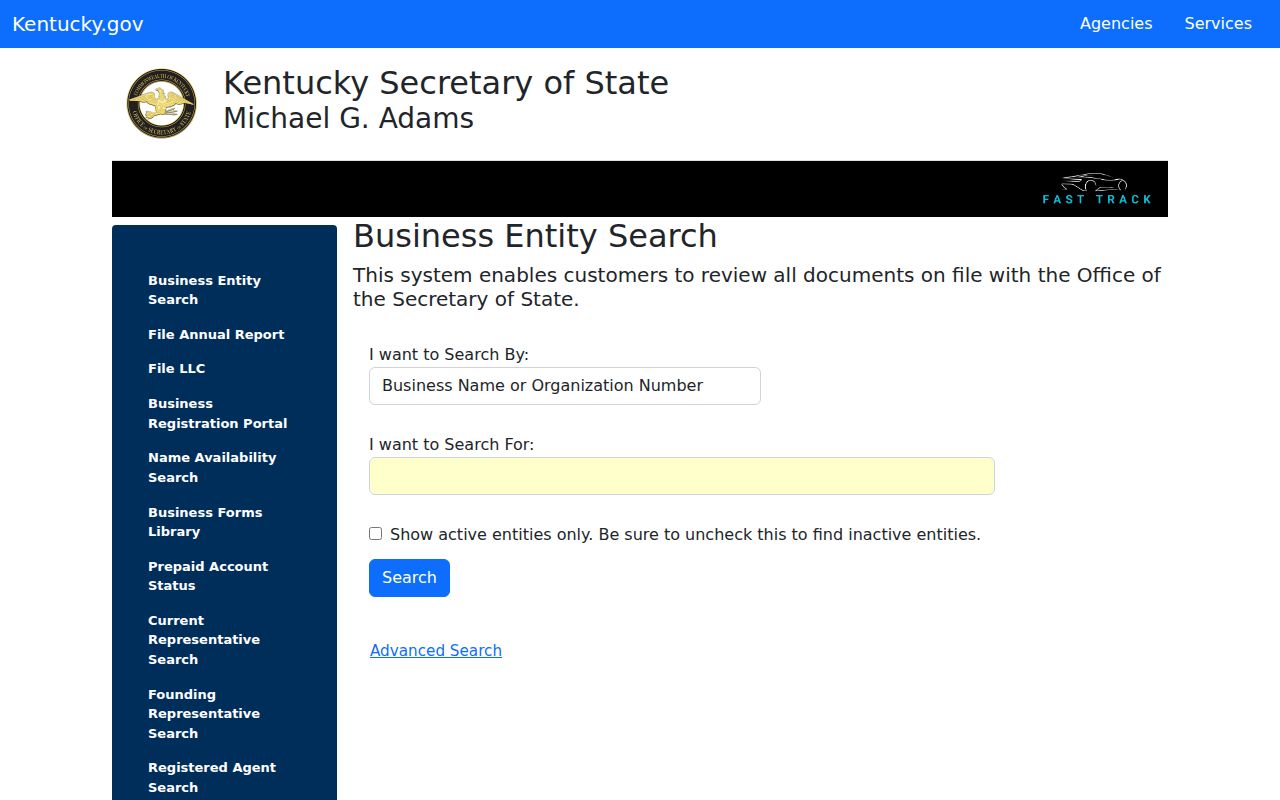
Pair any result with a second local fact, such as a deed party, a newspaper notice, or a court county. A business filing alone never proves residence. The professional-license source simply contributes its own corroborating fields.
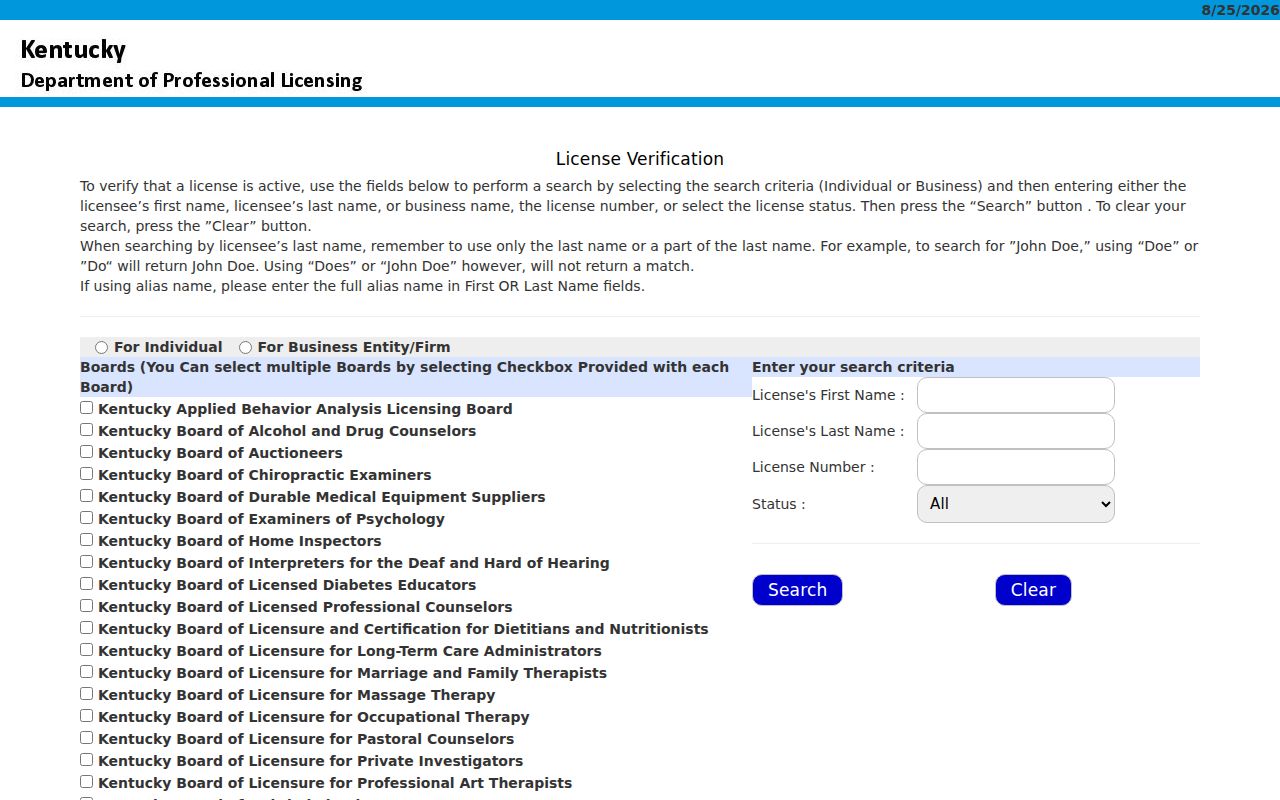
License status and board details can separate same-name professionals in Georgetown records. Address questions, though, belong to the proper local record.
Requesting Hidden Georgetown Records
Kentucky's Open Records Act opens the door. Statutes KRS 61.870 through 61.884 govern any Georgetown or Scott County record that is not posted online. KRS 61.872 requires a written, signed request. The custodian then has five days to respond unless a statutory delay applies. Always send the request to the right office. The city clerk keeps city acts and many permit or code files, the county clerk holds recorded documents, GSCPC manages planning material, and the court clerk produces case copies.
Georgetown's current form is flexible about delivery. It accepts mail, in-person, email, or online submission. The form asks for the record description, dates, requester details, use category, and delivery choice. Give the street address, record type, and date range. The city lists its temporary clerk counter at 629 N Broadway. Other city material still reflects a City Hall transition, so confirm the current counter before visiting. The Georgetown open-records page posts current forms and location notices.
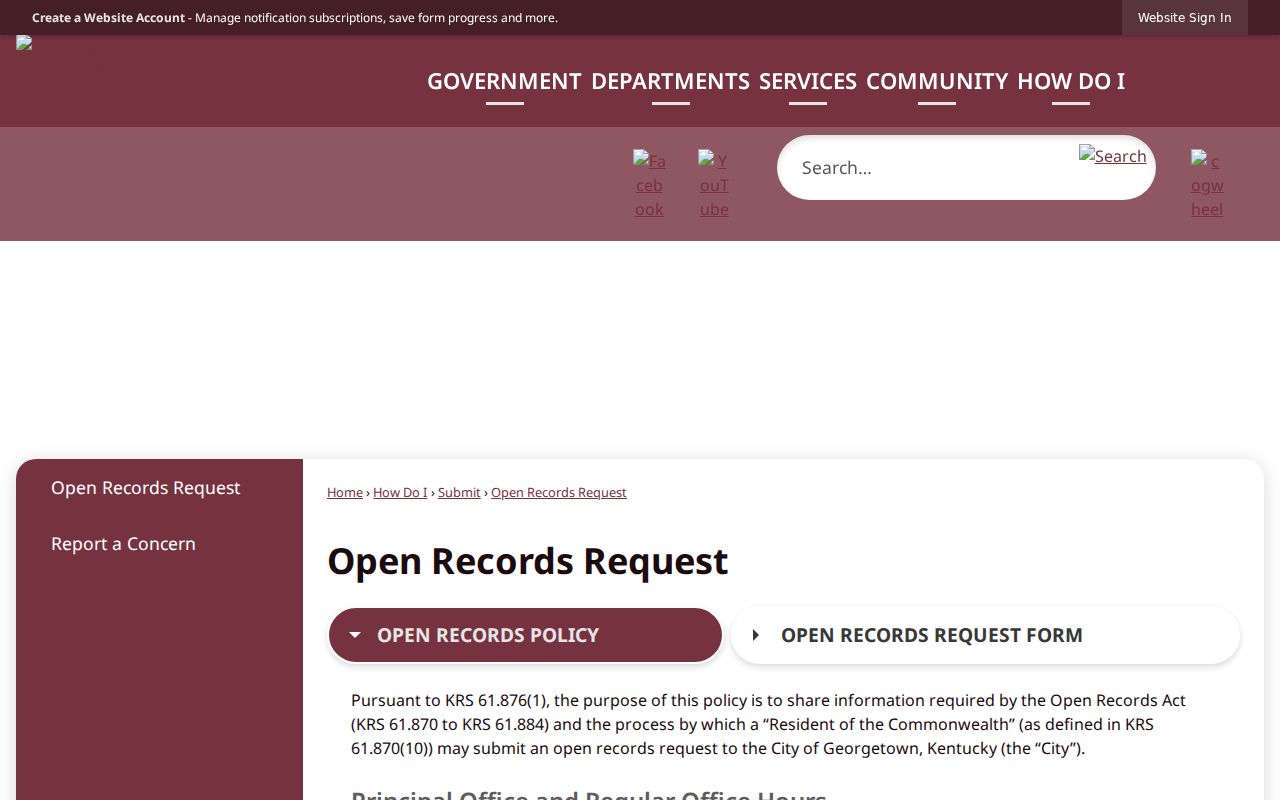
The form works best with one custodian, one record group, and a tight date span. Keep the scope narrow.
Historical Georgetown Residents Directory
Old directories live in the Scott County Public Library's Kentucky Room. The room sits at 104 S Bradford Lane. Its family files cover more than 250 surnames. Local books, maps, personal papers, oral histories, and cemetery records round out the shelves. Census microfilm runs from 1810 through 1930. Marriage registers, wills, deeds, tax books, and court orders add names and addresses across different years. Georgetown newspapers add more residents directory clues.
The public catalog names no printed directory publishers or shelf years, so ask Kentucky Room staff before assuming a national run. The Georgetown city directory collections page explains the shelf and how to read an entry. A directory name gains weight beside a dated source. Pair it with a newspaper, census schedule, deed, tax book, or cemetery record. That match places a household at one moment.
Georgetown Fires and Archive Gaps
Georgetown's paper trail has scars. Scott County endured courthouse fires in 1837 and 1876, according to the library's digital archive. Those disasters damaged records. They did not erase everything. A search that comes up empty proves nothing about a person's presence. The archive itself holds 21,865 digitized deed-book pages covering 1783 through 1883. It also holds 10,691 will-book pages spanning 1792 through 1896. Thousands of court-order and tax-book pages sit alongside them. Microfilm, clerk books, KDLA holdings, and newspapers may each carry a different piece of the same story.
The free archive and the office index cover different years and show different fields, so work both. Try surname variants, initials, and spouse names. A known road, Royal Spring, or another dated place term can crack a stubborn search. Always open the page image itself. Optical character recognition routinely misreads old type, and one misread letter hides a record. The library's 2016 oral-history partnership adds one more wrinkle. A former Georgetown resident may surface as an interview subject or place reference rather than in a deed-style index.
Protected Georgetown Resident Addresses
Kentucky Safe at Home shields eligible participants with a substitute address and mail forwarding. The protection reaches public and voter-registration records. Certification runs four years. It can be renewed. So when an expected address is missing from a Georgetown residents directory, that may be a lawful safety boundary. It is not an indexing flaw. Never try to rebuild a participant's location from relatives, adjacent parcels, or old records. The Secretary of State's Safe at Home page explains the official protection.
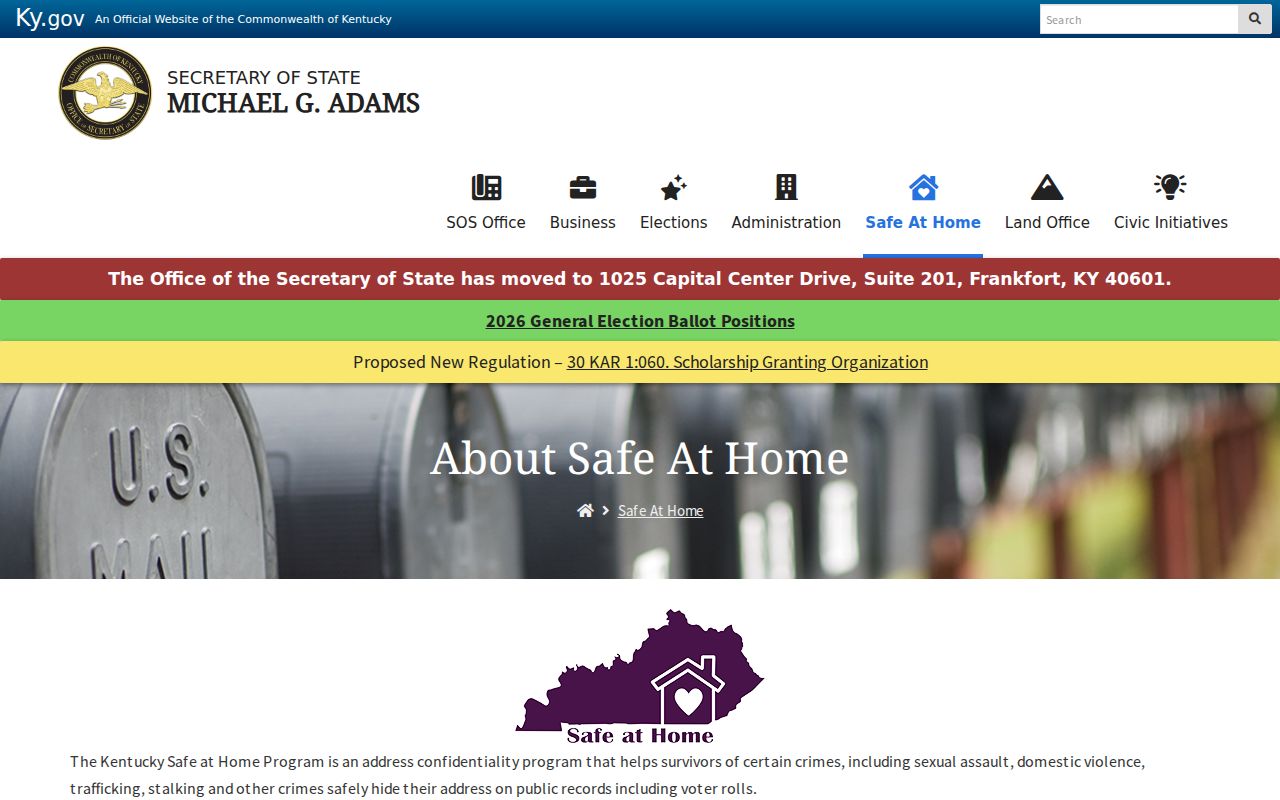
Deliberate gaps like this appear elsewhere too. Sealed court cases, confidential vital records, and restricted driver data all sit alongside the protected-address program as planned limits on what any resident lookup can show.
Lawful use. Georgetown records may support family history, estate research, civic transparency, and scam checks. Kentucky law does not permit stalking, harassment, or harm.
Scott Clerk Scam Safeguards
Scammers target Georgetown record searches too. In May 2026, the Scott County Clerk warned of a scam. The emails impersonated the clerk and planning office. The messages pushed ACH or wire payment through fake invoices. The warning sets a clear limit on any Georgetown residents directory search. Real parcel details can be copied into a convincing fraud. A scam email may name a real agency or deed. It is still a scam. Confirm every charge with the official office before paying. The clerk's scam alert shows the warning straight from the records custodian.
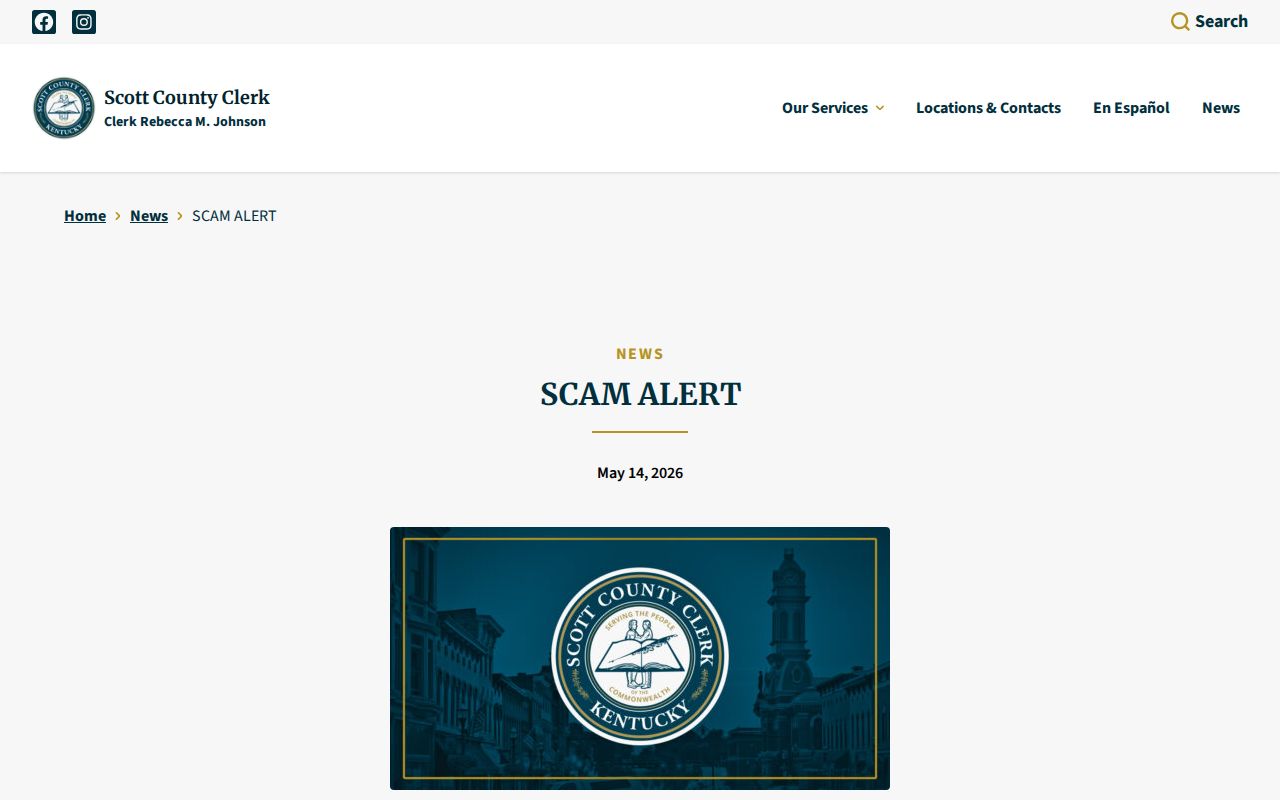
The clerk also runs a DOCALERT service. It can flag a deed or mortgage filed under a name you register. It is an alert tool only. It is not a title search, and it cannot vouch that a payment demand is genuine.